Experiences
Rajasthan has long been known as the “land of deserts and palaces.” But that’s only half the story. There is plenty more to see, do and experience. The desert is but one facet of the state’s varying landscape.
Take, for instance, the Aravalis – an undulating stretch of hills with their own unique plant, bird and animal life. RAAS Devigarh sits at the foot of this and provides its guests with a different side of Rajasthan to experience. RAAS Chhatrasagar in Nimaj borders a lake and reservoir, making it yet another unexpected sight in this “desert” state and supports a wide range of resident and migratory bird and mammal species.
When it comes to palaces, no one descriptor fits all. RAAS Devigarh and Rajmahal Palace, RAAS Jaipur, are more than just symbols of heritage and legacy. These hotels also represent modern design and contemporary aesthetics. At RAAS Jodhpur, in fact, you’ll be hard pressed to figure out where the 18th-century architecture ends and where 21st-century design begins.
This forward-looking sensibility is true about all RAAS hotels, and it’s what we bring to all the experiences we curate within our walls and outside. Whether it’s a visit to Mehrangarh Fort in an electric vehicle or birding boat rides in Nimaj, one way of getting a better sense of all that Rajasthan stands for is through the RAASHopper experience; visit two or more destinations and experience more with our extra special offers.


Once a waiting room for special visitors, the Silver Lounge now is a perfect family-friendly space. Located below the Darbar Bar in the Darbar Courtyard, this lounge is ideal for a private home theatre experience. Book the space to screen your favourite movie or cheer for your team during a big game. It’s also a great spot for small celebrations and family gatherings, recommended for all groups.
Timings 10:00 Hrs to 20:00Hrs
Please contact the palace concierge to arrange your visit.

A short ride from the hotel, Eklingji, a 1000-year-old Shiva temple complex, features 108 shrines and a striking 3.5 ft four-faced black marble idol of Lord Shiva. It is peaceful, well-preserved, and still visited by the Maharana. Nagda, the ancient capital of Mewar, is a tranquil heritage site by a lotus-covered lake. It preserves intricate 7th-10th century temple ruins, including the distinctive ‘mother-in-law’ and ‘daughter-in-law’ temples.
Nagda
Once Mewar’s capital, Nagda is now a tranquil heritage site near Eklingji, owned and maintained by the government. Set beside a lotus-covered lake, its 7th–10th century temple ruins evoke a poetic charm. Most structures were lost to time, but two ornate temples: the ‘mother-in-law’ and ‘daughter-in-law’, remain, along with a carved marriage pavilion where couples pay homage. No longer active for worship, Nagda offers quiet reflection amid grazing cows and local children at play.
We advise you to connect with the hotel for visitor timings.

Delwara, known as the ‘town of gods,’ features around 1000 temples, primarily Jain, and offers guided village walks led by local boys through Seva Mandir. Key sights include the carved Indra Kund stepwell and the Hunting Tower with views of the Aravalis. Experience local crafts at the Delwara Handicraft Experience at Sadhna Workshop, a fair trade initiative empowering over 600 women, where you can try block printing or stitching and purchase high-quality clothing.
Seva Mandir (an NGO) has sped the development of Delwara as a socially, historically and environmentally-aware village leading to organization of village walks by trained local boys. Visit to a local potter, home tours, temple sites and more make for these trips.
Indra Kund: A 15 meter deep step well, that is a marvelous example of stone carving.
Hunting Tower: Located on Kantya Hill, built by King Jasvantsinh for hunting, the Hunting Tower offers panoramic views over the village, the palace and the Aravalli hill range.
Sadhna Workshop: The main workshop of the fair trade initiative that empowers more than 600 women by transforming their skills into a self-owned enterprise. Fair trade and high quality women’s clothing can be purchased here.
Get a unique insight into craft, community, and empowerment through the Delwara Handicraft Experience held at Sadhna Workshop. Try block printing, stitching, and embroidery alongside artisans, then walk through Delwara to visit them in their homes.
Proceeds from the tour costs support local guides and the youth centre. Start at 5 PM to catch the sunset and spot monkeys at dusk.
To learn about timings and to book, contact the hotel. A staff member can accompany you, or pick up a map from Palace Services to explore on your own.

Chittorgarh, established in the 7th century, represents Rajput valor and Hindu resistance. This UNESCO World Heritage site, known for withstanding three battles against the Mughals, spans 14 square kilometers and includes over 100 temples, palaces, and reservoirs, all enclosed by a strong wall. Hiring a hotel guide is recommended for exploring the fort’s history. On your way back, visit Sawaryaji Temple, an hour from Devigarh. Though modest and often busy, it offers a glimpse into daily temple life and houses an ancient idol of child Krishna.
Sawaryaji Temple
On your return, stop at Sawaryaji Temple (1 hour from Devigarh). Though modest and often crowded, it offers a glimpse into everyday temple life. The temple houses an ancient idol of child Krishna in a newer structure. Visit with a hotel guide and driver for ease.
Kumbhalgarh
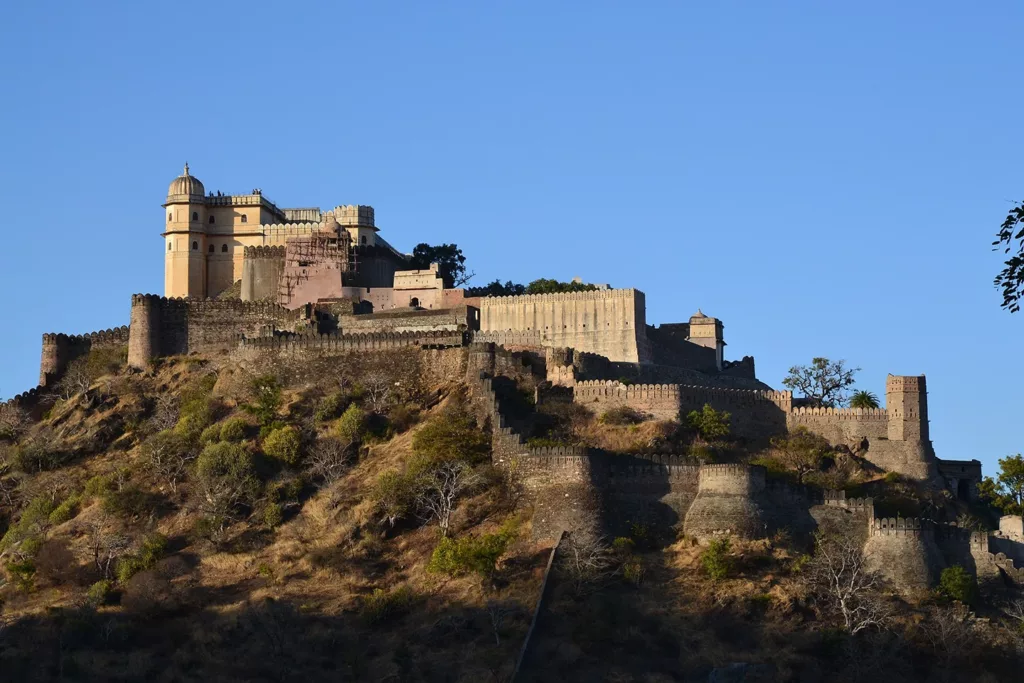
Built by Maharana Kumbha, Kumbhalgarh Fort is famed for its 84km long wall, second only to the Great Wall of China. Owing to its construction to a human sacrifice, the main gate now commemorates the beheading. Enclosed within are 84 smaller fortresses and 360 temples. On a clear day you can see as far as the sand dunes of the Thar desert. The Sanctuary viewed from the top is over 600 km2 and is home to panthers, bears, hyenas, lions,and endangered species, and birds like the Kingfisher. Foot tracking tours and horse safaris leave regularly from the Fort. From there, Devigarh is two more hours’ drive.
Ranakpur
Take a more scenic route with a detour to the incredible temple of Ranakpur. The complex is home to many temples, the largest of which, Chaumukha Mandir, is a complicated series of 29 halls, 80 domes and 1444 individually engraved pillars. Built over 65 years, the temple reflects Jainism’s deep-rooted philosophy of non-violence, which extends to strict vegetarianism and a ban on leather inside. Non-Jains can enter post noon. Watch out for the resident monkeys before heading an hour ahead to the majestic Kumbhalgarh Fort.

The tour starts at Udaipur City Palace (1559) on Lake Pichola, featuring a royal museum and Crystal Gallery. Next, we’ll visit the Shree Jagdish Temple (1651) before enjoying a scenic boat ride on the lake, offering beautiful views of the area. In the afternoon, you can choose a recommended lunch spot and explore vibrant markets for unique souvenirs like miniature paintings and silver jewelry.
Next, you’ll visit the magnificent Shree Jagdish Temple, a brilliant piece of Indian architecture from 1651. This three-story temple, dedicated to Lord Vishnu, is a serene space where you can witness a piece of living history still managed by the royal family.
Your journey continues to Dudh Talai for a boat ride on the tranquil Lake Pichola. Flanked by majestic hills and royal palaces, this historic lake, built in 1362, offers a heavenly escape and a new perspective on the city. As the sun reflects off the water, the heritage buildings turn a stunning golden hue, creating an unforgettable, romantic view.
Lunch and Shopping
For lunch, your concierge can recommend a restaurant that suits your taste.
No visit to Udaipur is complete without experiencing its vibrant markets. The city is a riot of color, and you’ll find it reflected in the lively streets. Browse for unique souvenirs like miniature paintings inspired by Mughal and Rajput styles, exquisite puppets, handcrafted pottery, and elegant silver jewelry. These unique items are a perfect way to take a piece of the city’s rich culture home with you.
Please note: Your concierge can assist with timings, charges, and recommendations for all excursions. We also suggest visiting Saheliyon Ki Bari, Moti Magari, and Sukhadiya Circle if time allows.

Nathdwara is a major pilgrimage site that houses the revered 12th-century idol of Shrinathji (a form of Krishna), which was moved here in the 17th century for protection. The temple draws thousands daily, and visitors are advised to use hotel-appointed guides to navigate the gender-segregated entry and interpret rituals. The temple offers eight daily darshans (viewings); the Rajbhog (breakfast) darshan is ideal for tourists seeking a calmer experience.
The temple draws thousands of devotees daily. Visitors are advised to go with hotel-appointed guides (ideally one male and one female, as entry is gender-segregated, though you can reunite inside). Guides also help interpret rituals and offerings, offering deep cultural context. The temple holds eight darshans (prayer viewings) daily, each reflecting a different phase of Krishna’s day. Ask your guide about specific timings. For a calmer experience, the Rajbhog (breakfast) darshan is ideal for tourists. If you’re traveling with children or prefer quieter temples, Eklingji offers a more peaceful visit.

High in the Aravali hills, Sajjan Garh (Monsoon Palace) is an hour’s drive from the hotel and offers panoramic views of Udaipur and the surrounding countryside. The palace itself is sparse, being smaller than originally planned due to the King’s death. Access requires a car due to steep, unsafe roads.The palace is open from 9 am to sunset, and the visit takes approximately 2.5 hours.
The Palace
The palace itself is sparse, and smaller than its original constructor intended, due to the King’s untimely death in the late 19th century. The views are well worth taking a trip up for. You will need to take a car, though, it’s too steep for bikes, and the road up is not safe for walking.
Sajjan Garh Biological Park
There is also a zoo, which they call the Sajjan Garh biological park. We would not recommend a visit, as though there are still a few animals, they are not all in an active condition.
Other details
Distance: One hour drive; 15 minutes from Udaipur
Total Duration of Visit: 2 hours 30 minutes
Opening Times: 9am- sunset (last entry 5pm) daily

Just an hour away, Haldighati’s turmeric-tinted hills mark the historic battlefield where Maharana Pratap fought the Mughal army led by Man Singh I. Today, the site hosts a fort museum honouring one of India’s earliest freedom fighters. The museum is engaging and child-friendly, with vivid storytelling on 18th-century Rajasthan; taking a hotel guide helps with translation. Outside, enjoy camel rides and shop for local rose water; the region now flourishes with rose cultivation that even supplies RAAS Devigarh.
The Museum
Engaging and interactive, the museum is great for children, offering vivid storytelling on the power struggles and sacrifices of 18th-century Rajasthan. Consider taking a hotel guide along for easier translation.
Outside, enjoy a camel ride and pick up locally made rose water; the region now thrives on rose cultivation and even supplies blooms to RAAS Devigarh.
Haldighati pairs well with a visit to Nathdwara and makes for an ideal first stop on a morning excursion.

Maximise your transfer by visiting off-the-beaten-track gems like Kumbhalgarh Fort, famous for its 84 km-long wall (the world’s second-longest) and 360 temples, offering spectacular views over the Wildlife Sanctuary. On the road, stop at Bullet Baba Temple, a unique shrine dedicated to a miraculous Royal Enfield motorcycle, where travellers seek good luck. For a scenic detour, visit the Ranakpur Jain Temple complex, including the spectacular Chaumukha Mandir (29 halls, 1444 carved pillars); note that non-Jains can only enter after noon.
Kumbhalgarh
One of Rajasthan’s most important forts, Kumbhalgarh was built under the reign of Maharana Kumbha, who was highly passionate about art and architecture and in whose memory an annual 3-day music and dance festival is held at the fort. In the surrounding villages many legends circulate about Kumbha’s construction of the fort; after several unsuccessful attempts to lay the foundations of the wall, a spiritual advisor suggested that a voluntary human sacrifice was necessary for the building works to commence. Even now, the main gate houses a shrine and temple in commemoration of the beheading. Within the Fort itself there are 84 smaller fortresses and over 360 temples, mostly Jain and the rest Hindu. The Fort, 38 km long, is the world’s second longest continuous wall after the Great Wall of China. The view from the top is spectacular: the flourishing vegetation of the Wildlife Sanctuary stretches out below the Fort and on a clear day you can see as far as the sand dunes of the Thar desert. The Sanctuary is over 600 km2 in size and is home to many of India’s endangered species, and birds like the Kingfisher. Foot tracking tours and horse safaris leave regularly from the Fort, where in addition to panthers, bears and hyenas you might even encounter lions, which are presently being reintroduced in the region as part of a country-wide wildlife conservation project. From there, Devigarh is two more hours’ drive.
Bullet Baba
The temple there houses a Royal Enfield motorbike, affectionately known as ‘Bullet Baba’. The story goes that a man crashed his bike by the side of the road and his bike was taken into police custody. Yet each night the bike returned to the place where it crashed, without anyone touching it. The story turned to legend and the bike gained a mythical status of its own. Now hundreds of pilgrims come each day to visit the bike and get good luck in their travels.
Ranakpur
If you’re willing to take a more scenic route, you can make a day of it and take a detour to the incredible temples of Ranakpur and Kumbhalgarh. About three hours from Jodhpur is Ranakpur and the drive, through the Rajasthani countryside and the Aravalli hill range, is beautiful. Ranakpur is famous for having the most spectacular of Jain temples in the area. Non-Jains can only visit the temples after noon, so we advise you not to leave from Jodhpur too early. Jainism is one of the ancient religions of India, which holds at its core a belief in non-violence. This extends to a specific diet, Jain vegetarianism that, among other things, excludes root vegetables because to eat them requires the killing of the plant. It also means that leather objects cannot be taken into their temples. The complex is home to many temples, the largest of which, Chaumukha Mandir, is a complicated series of 29 halls, 80 domes and 1444 individually engraved pillars. The intricacy of the structure is a testament to the 65 years that it took to build. The place is also famous for its large population of monkeys that live in and around it. Once you have explored the site, a further one-hour drive will take you to Kumbalgarh Fort.

Guests can book a private Cooking Session with the chef to learn favorite menu dishes, culminating in a four-course dinner featuring their own creations. For romantic evenings, the Upper Lawn II Dining offers a candlelit, six-course degustation menu overlooking the garden and pool, while the Orient Occident provides a private, similarly-curated six-course tasting experience. Alternatively, the popular “Pink City” inspired 51 Shades of Pink offers its own six-course tasting menu in a mirrored, candlelit setting adjacent to the Palace gardens. Connect with the concierge for all applicable charges.
Private dining at the Orient Occident:
Enjoy a special dining experience at Orient Occident. The setting is perfect, with candlelight and beautiful flower decorations on your table. You’ll savor a six-course tasting menu specially curated by our chef, all while enjoying ambient music.
Connect with the concierge for applicable charges.
Special dining at 51 Shades of Pink:
Dedicated to the “Pink City,” 51 Shades of Pink is a popular dinner spot, famous for its candlelight that illuminates the mirrored interiors. Situated next to the Colonnade, the restaurant also opens out onto the regal Palace gardens.
Here, you can enjoy a six-course tasting menu specially curated by our chef, complete with beautiful flower decorations and ambient music.
Connect with the concierge for applicable charges.

The Jaipur Polo Team has a rich history, achieving global recognition under the leadership of HH Sawai Man Singh II in the mid-1900s. After a period of decline, the team was revitalized by HH Maharaja Sawai Padmanabh Singh. Today, the team is once again a leader in the polo world, winning prestigious tournaments and setting new standards.
During the polo season, we offer complimentary entry for our guests to attend matches.

The Palace Atelier, connected to the renowned Maharaja Sawai Man Singh II Museum, is a true labor of love. It not only showcases the textiles, handicrafts, and design of the past but also creates a dialogue with modern India. This space reflects the royal family’s contemporary spirit, offering a glimpse into modern design and culture within a historic setting. It’s where the past and the future meet.

For nearly 10 years, the Princess Diya Kumari Foundation has been empowering women and girls in rural Rajasthan. Founded by Princess Diya Kumari, the foundation operates five centers that offer women advice, education, and opportunities to become financially independent.
A key initiative is promoting traditional Rajasthani crafts. The foundation helps women artisans sell their work to a global audience through the PDKF Store. The store’s collection, which blends traditional designs with contemporary style, was created by Princess Diya Kumari’s daughter, Princess Gauravi Kumari, and French designer Claire Deroo.

Experience the charm of Chandra Mahal, the private seven-story residence of the Jaipur royal family. This exclusive section of the City Palace offers a rare glimpse into regal living. As a member of the royal staff guides you through the opulent rooms, you’ll discover the unique beauty of each floor. Key highlights include the beautiful indigo Chavvi Nivas, the mirror-covered Shri Nivas, and the stunningly bejeweled audience hall, Shobha Nivas. This tour provides a unique opportunity to hear fascinating stories about the palace’s illustrious residents.

Discover the City Palace, a stunning royal residence in Jaipur. Built in 1732 by Maharaja Sawai Jai Singh II, it served as the kingdom’s administrative and ceremonial center. This magnificent palace combines Mughal and Rajput architectural styles and is still home to the Jaipur royal family. Today, parts of the palace are open to the public as the Maharaja Sawai Man Singh II Museum, showcasing the rich history and culture of Jaipur. It remains a vibrant hub for religious and cultural events.

Play a round of tennis on our grass court. It’s a great way to unwind, and if you’re alone, a team member can join you for a game. Rackets, balls, towels, and water are always provided.
Please note that our grass courts can sometimes have an uneven bounce.

Discover the 300-year history of the Palace with a guided walk. Take a tour of the suites where notable guests like Queen Elizabeth II, Jacqueline Kennedy, and King Charles and Princess Diana once stayed. You’ll also learn about the palace’s structure and the generations of kings who ruled Jaipur. If available, we may even be able to show you inside some of the suites.

The UNESCO World Heritage Site, Amer Fort transports you to another age and another time.
The Amer Fort was built by Raja Man Singh I in the year 1592. The fort remained the capital of the Kanchwaha dynasty till Jai Singh II built the city of Jaipur. This UNESCO World Heritage Site, transports you to another age and another time. The marriage of its marble and red sandstone aesthetic is timeless and a clear indication of Rajputana and Mughal styles. It also contains a museum of the famed woodblock printing on fabric that remains the great skill of Jaipur.

For a high-end and luxurious shopping experience, Hot Pink is a must-do in Jaipur.
Hot Pink is a high-end concept boutique founded by Parisian jeweller Marie-Hélène de Taillac and the late Gem Palace jeweller Munnu Kasliwal. In this beautifully lit, marble-floored space you’re offered a stunning selection of handicrafts, textiles and women’s clothes in various luxurious fabrics. Most of this assortment is by Indian or French designers and are arranged by colour for the most perfect visual aesthetic. This sought-after boutique sits in the serene garden pavilion of Hotel Narain Niwas Palace.

Avoid the hustle-bustle of the city and shop in a luxurious and tranquil environment at Hotel Narain Niwas Palace.
10 minutes away from RAAS’ Rajmahal Palace lies another renowned heritage hotel — Narain Niwas Palace. Its perennial gardens amongst tamarind trees create an aura of royalty. The magnificent patio offers you a fusion collection of exclusive labels. The rich culture, craft, and handicrafts of Jaipur are all represented in this luxurious shopping center. The arcade’s ambiance sets itself apart from the rest of Jaipur’s shopping experiences. From handicraft to art, from textile to jewelry, from silver to precious stones, you’re presented with the very best shopping has to offer. Avoiding the hustle-bustle of the city, you’re able to shop in a luxurious and tranquil environment.

Visit the City Palace in the heart of Old Jaipur to explore its illustrious history.Built in 1732 and impeccably maintained, it spans nearly one-seventh of the old city. The complex features gardens, courtyards, and mini palaces showcasing Rajput, Mughal, and European architecture. A portion is now a museum displaying royal antiques and artifacts.
Its intricate design offers a true glimpse into Rajasthan’s traditions and royal lifestyle.
Another small museum on-site exhibits miniature paintings, memorabilia, and ceremonial armor.
The palace is located a stone’s throw away from the commercial city center and also contains a small museum within the complex. This museum showcases famous miniature paintings, memorabilia, and ceremonial armor.

The Toorji Ka Jhalra stepwell was built in the 1740s by Maharaja Abhay Singh’s Queen, continuing the tradition of royal women commissioning public water works, reflecting the centrality of water collection in women’s household chores. Recent restoration uncovered over 200 feet of hand-carved rose-red sandstone, revealing intricate details like dancing elephants, lions, and water-spouts. Its original mechanism featured a Persian Wheel driven by bullocks. Today, the Jhalra remains a key, though neglected, part of the Walled City’s water network.
Stepwell
The construction of a Stepwell never really stopped; as the steps follow the fluctuating water table down, to provide easy all-year round access. Submerged for decades, its recent drainage, clean-up and restoration has uncovered over two hundred feet of hand carved treasure in Jodhpur’s famous rose-red sandstone; intricate carvings of dancing elephants, medieval lions and cow water-spouts, as well as niches housing deities long gone. The well’s original system consisted of a Persian Wheel driven by a pair of bullocks circling the platform on top, which drew water up to two different access levels and a separate tank. Toorji Ka Jhalra formed a part of the Walled City’s complex system of water collection, now sadly most of which is in a state of disrepair and neglect.

Jodhpur offers family fun, from relaxing in the hotel’s shaded alcoves with board games to the thrill of the Flying Fox. Ethical shopping is available at Sambhali Boutique, which sells embroidered crafts benefiting rural women. Guests can enjoy hands-on Cookery Courses with the hotel chef or market culinary tours. For dining, the neighboring Stepwell Café provides views of the beautifully restored Toorji Ka Jhalra Stepwell, which has become a vibrant community space.
Flying Fox
Flying fox is a repeated favourite with children, although there is a height requirement, which it’s good to check beforehand to avoid disappointment.
Shopping
For a spot of shopping, try Sambhali Boutique, who have a beautiful range of brightly coloured and embroidered stuffed animals. Better still, everything in the shop, including beautiful jewellery, is produced by rural Rajasthani women’s groups, and helps funds female empowerment projects in the most poverty-stricken parts of the state.
Cookery Courses
Cookery courses are hugely popular with families, we can open up our kitchens to you and our head chef will help you craft a set of recipes for you to cook and then devour for dinner. A really fun way to spend an afternoon, learn about local Rajasthani delicacies and get a sneaky look behind the scenes at the RAAS. In fact, our head of food and beverage also loves to arrange culinary tours; he’ll take you around the grain, spice, vegetable and pulse markets, showing you where all the food at our restaurants is sourced and giving you a taste of how fresh your dinner is! It is a lovely way to explore the city, accompanied by an old hand who knows all where all the best food is to be found.
Stepwell Cafe
Indeed, RAAS has plenty to offer for the food lover, but if you want to explore beyond our walls for a light lunch or some delicious coffee, try the Stepwell Café, just next door. Three-stories high, it has incredible views of Jodhpur’s largest Stepwell, which used to provide the local area with fresh drinking water. Architecturally stunning, it now provides the local boys with their own swimming pool and from the café you and the family can keep an eye on the daily competition to see who can jump from the highest step. RAAS was at the heart of the stepwell restoration project, which took several months and we are very proud that the ancient architectural marvel of the Toorji Ka Jhalra (stepwell) has been returned to its former glory and become a new community space.

Instantly recognizable as the Blue City due to its indigo houses, this Walled City is an eccentric hub of activity. Explore temples, shops, elegant Jharokhas, and the remnants of its walls, notably the six monumental Pol gates. Beyond the blue, the city delights in architectural details, including ancient Deodi entrances, exquisite Jaali friezes, and sacred Chowk squares. The Clock Tower Market is a popular stop, but true shopping gems are Sarafa Bazaar (for silver jewelry) and Bibaji Churi Wale (for unique bangles). Complete your visit with dinner at a rooftop restaurant like Pal Haveli or Fortitude for great food and panoramic views of Mehrangarh Fort.
The Sights
There is so much more to see than just blue houses; the town is a jumble of old and new and the fun is in spotting stunning detailing, finding tiny courtyards, hidden temples, mosques and untouched havelis in the middle of the buzz of the city.
In spotting an ancient Deodi entrance to a new ordinary house, an intricately carved over-hanging Jharokha window-balcony, an exquisite Jaali frieze in the famous rose-red sand-stone, a Chowk square blessed by a 300 year old sacred Peepul tree, the crumbling remnants of an elegant red sand-stone wall. In fact, the entire old city was completely walled in till the 1950s with the six monumental Pol gates closing up from dusk to dawn. The walls have all but been absorbed; the gates still stand.
Clock Tower Market
Exploring the city is also a great opportunity to investigate Jodhpur’s shopping scene. The clock tower market is often touted as the premier shopping area of Jodhpur and whilst it’s worth a quick visit for trinkets or fruit and there is an amazing samosa shop at the south-gate, the gems of Jodhpur shopping can be found elsewhere.
Sarafa Bazaar
On the opposite end of the spectrum from these opulent gem shops, is Sarafa Bazaar, the city’s silver and jewellery market. Completely non-touristy, silver jewellery is sold by weight, at a price that varies with the stock exchange in Mumbai. Unlike the Circuit House road jewellers, they sell jewellery entirely catered to the local market, so head there for traditional, very affordable styles and the opportunity to chat with the jewellers themselves.
Bibaji Churi Wale
For a more sedate shopping experience try taking the road east out of the north gate of the clock tower. Past all the bamboo sellers, you get to a stretch of shops dedicated to bangles. The uninitiated could assume that there is little variety in bangle styles, but sticking your head into any of these shops it becomes obvious that they are an art form in themselves. Bibaji Churi Wale, the furthest from the clock tower, is a perennial favourite. The tiny, cave-like shop is reminiscent of Ollivander’s wand shop; stacked floor to ceiling with cardboard boxes, each one opens up to unique and stunning bangles. Plain glass, carved bone, jewelled, in every colour and shape and size under the sun, each one is a marvel.
Restaurants
There is an unwritten rule surrounding Jodhpur’s restaurants and bars: that an evening not spent on roof terrace, under the watchful eye of Meharangah, is an evening wasted. So you’ll find the area around RAAS is cluttered with restaurants, all boasting a roof terrace in one form or the other. If you fancy a change of scene from Darikhana or Baradari, Pal Haveli has a lovely candlelit rooftop that affords a view of the clock tower market and beyond. The restaurant is famous for its incredible Rajasthani food and the Laal Maas is to die for. Closer to home, the step well is also home to Fortitude, a gorgeous rooftop restaurant that straddles the roof of three different havelis. One of the best examples of panoramic views of the fort and Umaid Bhawan it also has an incredible view down into the step well, it serves amazing Indian BBQ and tapas, alongside continental and Indian food.

For guests seeking village tranquility outside Jodhpur, Osian, an oasis in the Thar Desert (about a 90-minute journey), is ideal for half-day trips. Osian is home to some of Rajasthan’s oldest Hindu and Jain temples, including the prominent Sachiya Mata Temple and the beautifully carved Mahavira Jain Temple. Popular activities, best enjoyed as the day cools, include Camel Treks across the dunes, often concluding with an unmissable sunset dinner. Additionally, guests can experience spectacular Traditional Folk Dances in the village; the concierge can arrange all excursions, though camel trek prices and availability may vary seasonally.
Sachiya Mata Temple
The Sachiya Mata Temple overlooks the town centre from its hilltop position, but can’t compare with the nearby Mahavira Jain Temple (10 Rs), which is well-maintained and has myriad alcoves and 28 pillars radiating out from its beautifully carved central shrine. Wander from here around the other temples, which have some interesting features; look out for the projecting stone elephants of the Peeplaj Temple.
Camel Treks
Camel treks are very popular at Osian, and these trips are best done in the afternoon, as the day cools. Though trips can be a little cheesy at times, the experience is great and sunset dinners on the dunes are unmissable.
Traditional Folk Dances
Traditional folk dances also happen in the village, and are a great spectacle. Speak to the concierge, who can organise everything for you, though prices for camel treks will vary with the season and can be difficult to do in monsoon periods.

Start with the Rao Jodha Desert Park, a restored expanse of volcanic rock beneath the fort, offering early morning guided tours to spot wildlife and learn about local flora. For a longer outdoor adventure, an intermediate level Horse Riding trip is available 40km away, typically lasting 2-3 hours. A must-see is the Bishnoi Villages, a desert community known for strict environmental protection, where members historically made the ultimate sacrifice at the Khejarli Massacre to protect their trees. Half-day excursions provide a guided jeep tour to observe traditional crafts like pottery and carpet weaving, and may include witnessing a traditional, mild opium ceremony, which is legally permitted for their religious practices.
Rao Jodha Desert Park
First stop is the Rao Jodha Desert Park, a striking expanse of volcanic rock below the fort walls and home to a variety of flora and fauna. Untouched for years and only inhabited by some particularly obstinate weeds, the Desert Park was carefully constructed in 2006 and traditional plants nurtured in what was once a barren wasteland. Early morning guided wildlife tours can be arranged which last for around 2 to 3 hours, although routes are flexible. The expert guides will describe the history of the area to you, help you spot some of the more cleverly camouflaged animals and explain the culinary and medicinal uses of the plants in the area. Entry is Rs.100 per person and a group tour guide costs a further Rs.400.
Horse Riding
Horse riding is another amazing half day trip located a 40km (1 hour) drive away. We wouldn’t advise that complete beginners book this riding experience as it typically lasts between 2 and 3 hours. Efficient guides are provided and the routes wind through beautiful Rajasthani countryside and include views over the nearby Thar Desert. This is a fun and relaxing way to enjoy an outdoor adventure alone or with the whole family. These trips are subject to availability and are often only possible during the period between August and April. Therefore please inform RAAS if you are interested and they will be more than happy to make some enquiries and arrange a bespoke experience for you.
Bishnoi Villages
The Bishnoi villages are a must-see for any budding environmentalists. They are a tight-knit desert community united by their religious practices, which place great emphasis on the protection of the environment. It is, for instance, forbidden to kill animals, fell green trees or use the blue dye produced from bushes. Members of the community are required to make sure that any firewood they use is devoid of insects and often just resort to burning dried dung instead. The Bishnoi villages are scattered just a 45-minute ride away from Jodhpur, where water is scarce and many use sand to clean dishes and utensils. Khejarli, one of the main settlements, is well-known as the place of the Khejarli massacre, a striking act of self-sacrifice on behalf of the Bishnoi to protect their local flora. When a royal party arrived in the village to fell trees sacred to the community for use in the construction of a new palace, many protested by hugging the trees and giving their lives in defiance of the official order; 363 of them were slain.
The religion of the Bishnoi also strictly forbids them the use of any drugs or alcohol, however, this rule is not usually adhered to: they are the only people in India who are still legally allowed to consume opium for religious purposes, which range anywhere between wedding celebrations and welcoming travellers. The drug is usually consumed in the form of a brew made from various parts of the poppy plant’s head, such as poppy seeds or the dry pod itself. This tea is served ritualistically at so-called opium ceremonies, where the host pours a small amount of mixture into their cupped hand and the guest licks it off their palm. While it is possible to extract some quantity of opiates with this method and there is, indeed, an addiction problem among the Bishnoi, these ‘opium teas’ are usually very mild and are unlikely to have any perceivable effect if consumed. We would recommend a half-day excursion, available for Rs.1500 per person, which includes a jeep ride out the city and a guided tour round several of the villages where you can watch traditional craft activities, like pottery and carpet weaving, as well as one of the traditional opium ceremonies.

Mehrangarh Fort is Jodhpur’s must-see site, best visited early morning with an audio guide to appreciate its fascinating history and extensive royal collections; the fort’s high vantage points offer incredible city views. For adventure, the Flying Fox Zipline offers an exhilarating ride across six lines over the fort. Afterward, cool off at Jaswant Thada, a white marble cenotaph with serene gardens perfect for a picnic. Conclude the day by exploring the restored 18th-century Chokelao Bagh gardens at the fort’s base, followed by dinner at the Chokelao restaurant, which provides the best possible view of the illuminated fort and Jodhpur.
The fort is in such good condition because Jodhpur’s royal family lived there until the 1950s! Indeed the fort museum has a beautiful collection of the families’ most extravagant paintings, palanquins and even cribs, which continued to be used well into the twentieth century. From the top rooms of the museum the view of Jodhpur is incredible, so bring your cameras (the camera fee is worth it!).The fort’s shop is well curated and is the source of some lovely books and paintings and, should the mood takes you, the palmistry shop is always well-received.
*Prices mentioned are indicative
Flying Fox Zipline
For the more adventurous types, the Flying Fox Zipline is definitely worth doing. Six different zip lines crisscross the top of the fort; shooting around Mehrangarh on zip cables is exhilarating and you get fabulous views of Jodhpur whilst doing it. It is extremely safe and secure but can get booked up in high season so make sure you reserve a spot (Rs. 1900 per person*) while you can. For this experience, your height should be a minimum of 4’7″ (139.7 cm) and a maximum weight of 115 Kgs (253.5 lbs).
Jaswant Thada
After the heart-racing ziplines, Jaswant Thada, the white stone cenotaph, is a lovely place to cool off. Sit in the gardens and take in the beauty of the memorial, or try and spot kingfishers in the small lake. It is a lovely place for a picnic. Inside, you can explore the amazingly carved white marble screens, so thin they seem to glow in the sunlight.
Chokelao Bagh
Make sure you head down to Chokelao Bagh, the garden which nestles at the foot of the Mehrangarh Fort. The route to the gardens lets you explore more empty parts of the fort, so it’s good to take your time looking around, on the way there. The 18th-century Rajput garden has recently been restored with its traditional flowers and designs. For only Rs. 30, it is a lovely place to visit at night; the Mehtab Bagh (Moonlight Garden) is designed to be especially magical under the stars. It is filled with the white flowers of Chandni (Tabernaemontana Coronaria) and the sweet-smelling Kamini (Murraya Exotica), great for a romantic walk. Afterwards, the Chokelao restaurant, on the upper terrace of the gardens, is the perfect place for an atmospheric dinner, you can get no better view of the fort and Jodhpur and the food is great.
*Prices mentioned are indicative
Umaid Bhawan Palace, a blend of royal residence and hotel, offers a small museum section and an exclusive restaurant. High-end jewelers like Gems and Jewels Palace are located near the palace on Circuit House Road. For traditional, affordable silver, visit Sarafa Bazaar. Lalji Handicrafts on Circuit House Road is a must-visit treasure trove for ethically sourced smaller antiques and curios, with shipping available.
Gem & Jewels Palace
Under the eye of the palace are some of the best gem shops in Jodhpur. Though we would definitely recommend our own RAAS branch of the Gem Palace, which hails from the jewellery capital Jaipur, these boutiques are definitely a must for the serious shopper. Along Circuit House Road lies several gorgeous jewellery shops, including the (unadventurously named) Gems and Jewels Palace. Here you can find a mixture of traditional Indian and contemporary Western styles, all beautifully executed and reasonably priced.
Sarafa Bazaar
On the opposite end of the spectrum from these opulent gem shops, is Sarafa Bazaar, the city’s silver and jewellery market. Completely non-touristy, silver jewellery is sold by weight, at a price that varies with the stock exchange in Mumbai. Unlike the Circuit House road jewellers, they sell jewellery entirely catered to the local market, so head there for traditional, very affordable styles and the opportunity to chat with the jewellers themselves.
Circuit House Road
Circuit House Road is home to a concentration of Jodhpur’s best antique shops and they are an absolute must-visit. The city is famous for its antiques, and rightly so. When shopping, the boutiques filled with old doors, windows and architectural detailing are incredible, but it’s worthwhile to note that this ‘architectural salvage’ is sourced by ripping heritage havelis apart for their detailing (similarly there are charges for exporting particularly old objects). More ethical to purchase are the smaller pieces and antiques and there are certainly plenty of places that sell them. Lalji Handicrafts is deservedly the most famous of these shops. Entering, there are no rules are to what you can find. Everything from axes to old wedding photos to chess pieces to cut crystal martini glasses, the shop is a treasure trove of trinkets and curios. They will ship anything you buy, so no need to lug that elephant-shaped foot stall across India and it’s lovely to have something tangible to remind you of the opulence of Jodhpur when you return home.

Recreate your favourite dishes from the menu by stepping into our open kitchen and cooking alongside our Camp Chef. Discover the RAAS approach to preparation, pairing, and presentation — a hands-on journey into the culinary arts. The cooking session includes a four-course dinner in the evening as well.
Contact concierge for the price.

For a truly memorable evening, enjoy a special dining experience by the pool. Surrounded by flower petals and candlelight, you’ll be treated to a hand-picked, curated menu from our chef, making for a perfect end to a perfect day.
Contact concierge for the price.

Enjoy a private family picnic on the banks of Lake Chhatrasagar, nestled within 1,500 acres of wilderness. Surrounded by lush nature and abundant birdlife, you’ll savor a special menu curated by our chef, making for a perfect afternoon escape.
Contact concierge for the price.

Engage in a hands-on clay crafting session where you’ll learn the art of shaping and molding clay. Guided by skilled artisans, you’ll create your own unique piece, learning traditional techniques in a memorable and relaxing environment.
Contact concierge for the price.

Watch a memorable sunset over the pristine wetland from the comfort of a boat. We’ll take you to the ideal spot to see the sun dip below the horizon while you enjoy tea, coffee, and small bites. For a special occasion, we can also arrange for champagne or wine. The boat can accommodate up to 10 guests.
Contact concierge for the price.

The farmers and shepherds invited here by Thakur Chhatra Singh still live a self -contained and harmonious life in settlements around RAAS Chhatrasagar. The Camp organizes Farm and Village visits to experience their life style closely.
Contact concierge for the price.
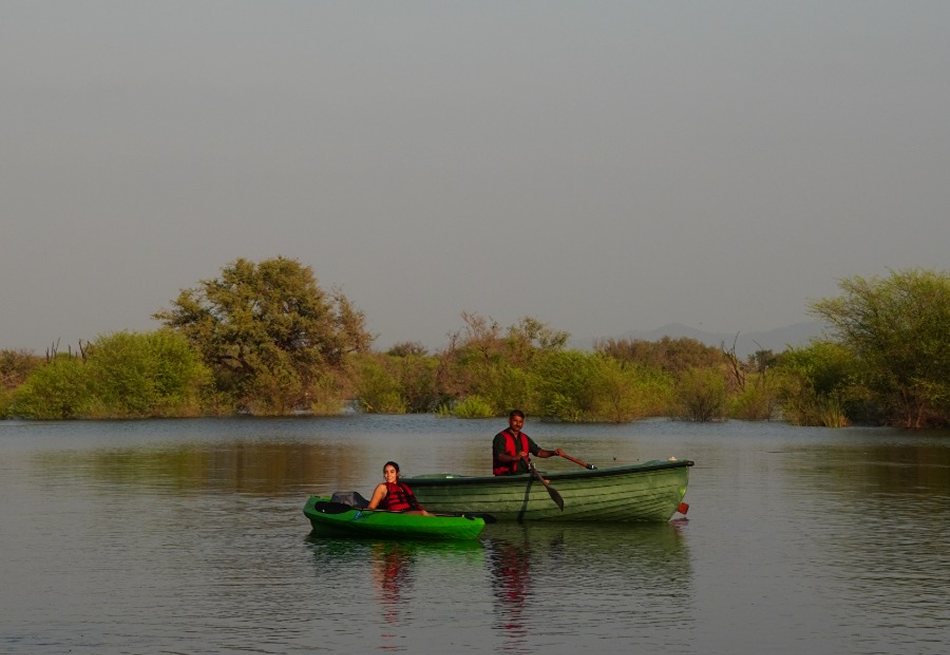
For a more active and intimate way to explore the lake, grab a kayak. You can paddle through all the lake’s hidden nooks and crannies. Bring your favorite playlist on your iPod or, even better, just soak in the silence and the sounds of nature.
Contact concierge for the price.

Apart from the 250 bird species found at and around RAAS Chhatrasagar, the wilderness around is also home to Blue Bulls, Wild boar, Jackles and many more. The Camp organizes Wildnerness Safari in an open Jeep for the guests to explore this rich natural habitat – a unique opportunity to experience the region’s wildlife and birdlife up close.
Contact concierge for the price.

Stargazing offers a magical opportunity to connect with the universe, revealing a stunning array of stars and celestial wonders. Enjoy the beauty of the night sky as you unwind and contemplate the mysteries beyond our world.

Comprising over 250 species, the wildlife around the property is diverse that guests can enjoy from close quarters. Guided nature walks are the best way for you to get an introduction to them.