“The aim of rewilding isn’t to turn the ecological clock back in time, but to allow it to actually start ticking again.” ― Eoghan Daltun, An Irish Atlantic Rainforest: A Personal Journey into the Magic of Rewilding.
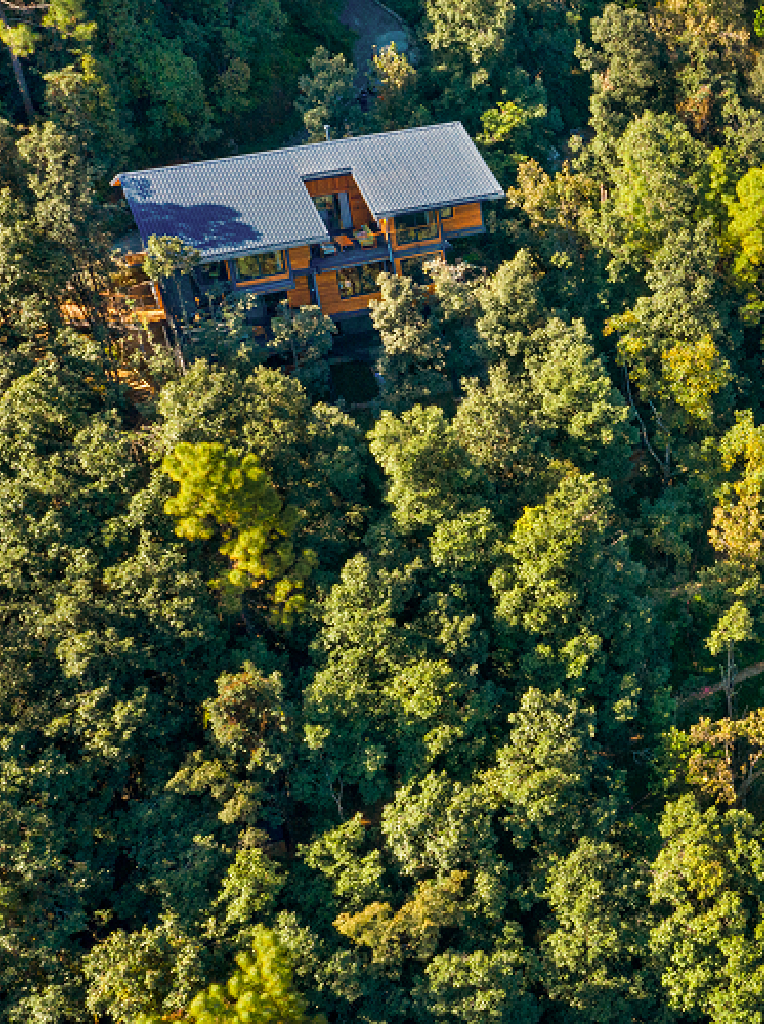
Conservation, sustainability, and ecological balance go beyond buzzwords and form the foundational principles at RAAS Chhatrasagar. Here, conservation is not preservation; it extends to participation.
As the discord over climate change continues to grow, we are forced to look within and consider how we can do better. While traditional practices focus on control – protecting species, landscapes, and resources through constant intervention, rewilding trusts nature to heal itself. No system can function independently, and a balance in nature is a systematic one. Rewilding makes for a bigger chunk of solving the problem, if done right and if done passionately.
To put it simply, rewilding is a way to help nature heal by letting it take the driver’s seat. Traditional conservation often involves human intervention to manage the land. However, rewilding is about stepping back and letting natural processes like forests growing back or rivers finding their own paths happen on their own. We focus on the core functions of animals and vegetation, such as predators balancing deer populations or beavers controlling floods. Unlike other conservation practices, rewilding is okay with new species and environments forming. The ultimate goal isn’t necessarily to “freeze” nature in the past, but to restore the plants and animals that make an ecosystem healthy, and then let them adapt to the modern world in their own way.
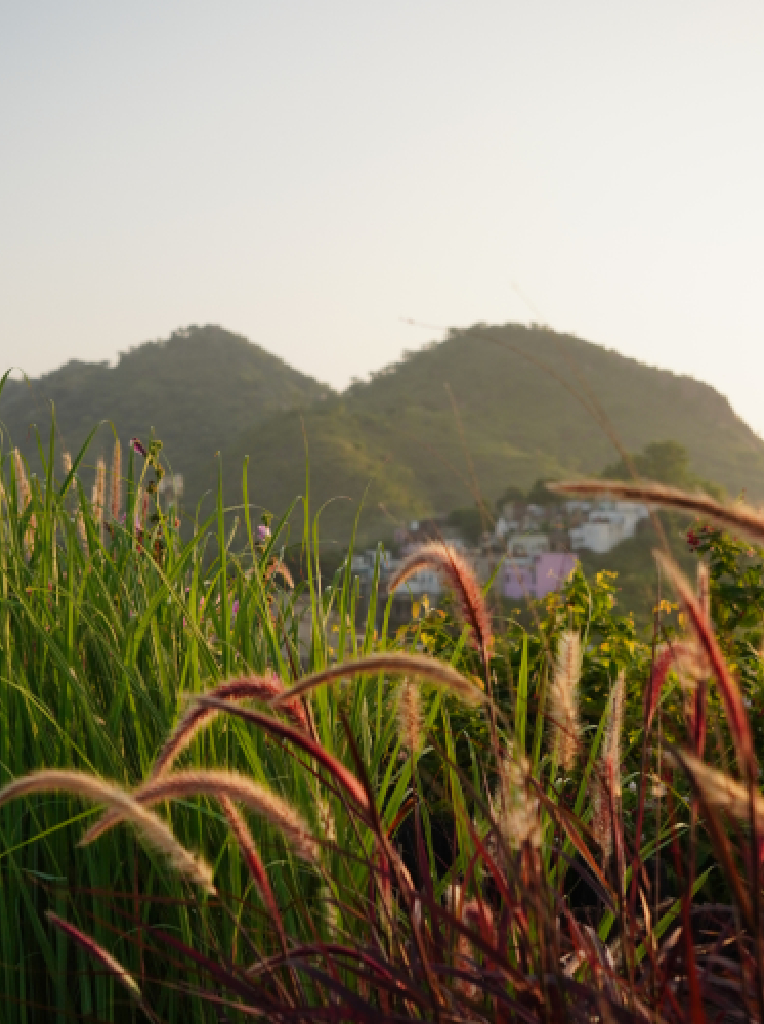
At Chhatrasagar, this philosophy takes root in small, patient acts. Significant areas of our 1,500 acres of land have transitioned from agricultural use to conservation. For our team of naturalists and biologists, walking the land isn’t just research; it is an ongoing conversation that helps safeguard wildlife corridors. This passion is rewarded with the land’s vitality surging again and the revival of native vegetation such as Ber, Babul, Khejri, Kair and Rohida. A small but steady gesture toward balance.
Farmlands shaped by human intervention are slowly growing into living, breathing wild ecosystems where humans merely observe, and nature takes the lead. RAAS Chhatrasagar features one of Rajasthan’s largest grassland ecosystems, home to incredible biodiversity. To bring about this transformation, our team focuses on eliminating invasive species, nurturing native plants, and supporting carbon sequestration. All of which are crucial for combating climate change.
The initiative has attracted diverse wildlife like the Indian Leopard, Jungle cat, Hedgehogs, Jackals, Nilghai (Indian Blue Bull), Wild boar, Mongooses, and Porcupines, to name a few. Their presence also offers excellent viewing opportunities for visitors.
Ecological balance and travel may seem like an unlikely pairing. They’re not. Travel allows us to learn about a place, its people, culture, and food. It can go beyond sightseeing and play a crucial role in sparking conversations about caring for our planet. As we explore new ecosystems, we become more aware of how to protect them. Leading establishments invite guests to engage in these initiatives. Take, for example, The Brando in French Polynesia – they aspire to be the first carbon-neutral private island by harnessing solar energy and sustainable practices, including coral reef restoration. For Roque Sevilla, Conservationist & Founder of Mashpi Lodge, “A luxury hotel can also be a research lab for biodiversity.” For us at RAAS Chhatrasagar, it is our commitment to rewilding.
The experience at RAAS Chhatrasagar works in harmony with nature and its resources. Guests don’t just enjoy the amenities and activities, but they also observe and understand the living systems around them. They hear the call of the nilgai, spot rare bird species like the Great Crested Grebe or a Northern Pintail, indulge in local produce, explore the grassland, and learn about a predator’s presence. They see for themselves how natural processes unfold. Rewilding here is a continuous partnership between people and place. It reminds us that ecological restoration is not about reversing time, but enabling life to move forward sustainably.