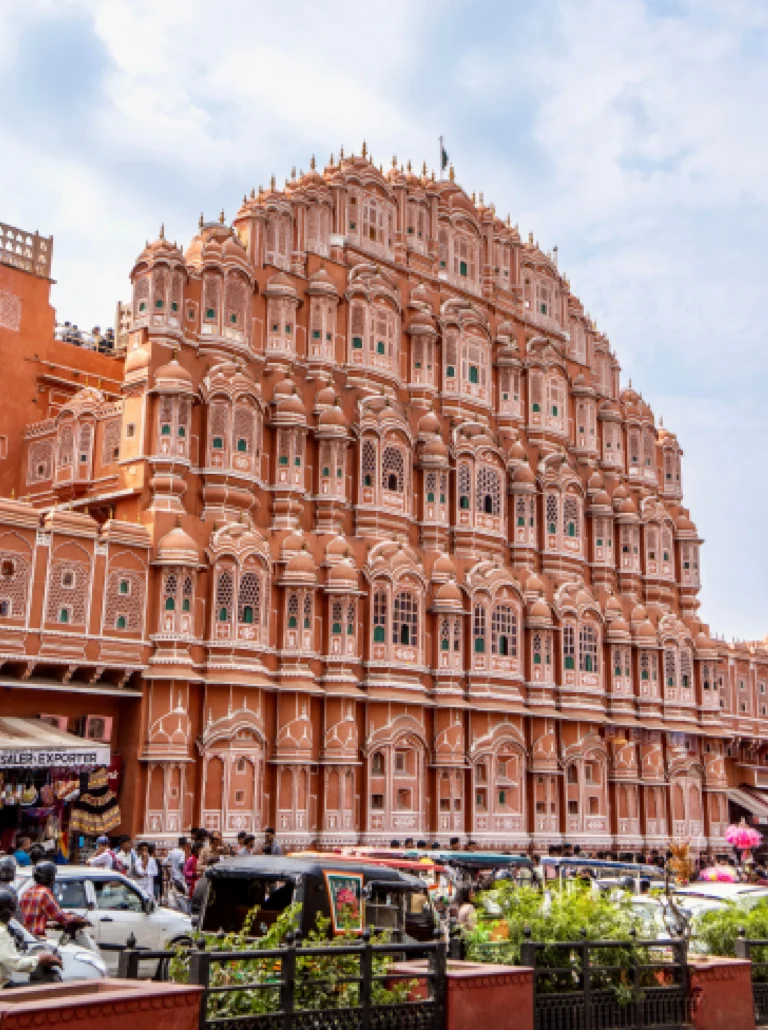
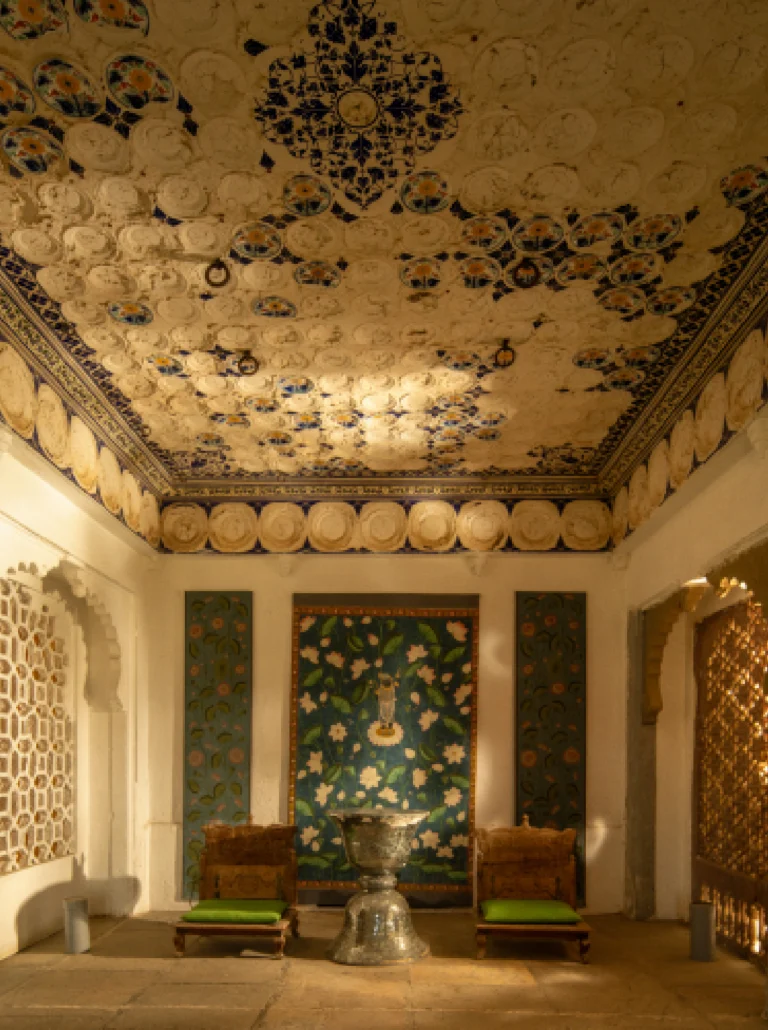
Over the years, the way we travel has transformed. There was a time when holidays were centered around famous landmarks; these sites became backdrops for family photos marked as tangible reminders that we had been there. Now, travel has expanded and is more about finding hidden gems, shopping as locals do, spending time in a café that has been running for two decades, or greeting the owners of charming mom-and-pop shops.
Of course, visiting an iconic landmark remains part of the checklist, but it is the life around it that creates the memoir. Mehrangarh Fort in Jodhpur is no exception. Built in 1460 by Rao Jodha atop a 125-metre volcanic ridge, it is among India’s largest forts. Its mighty red sandstone structure has never been breached, and its palaces (Moti Mahal, Phool Mahal, Sheesh Mahal) remain in remarkable condition. Within its walls, the museum safeguards one of Rajasthan’s most remarkable collections of royal artefacts. Each year, millions pass through its towering gates, becoming part of its ever-evolving story.
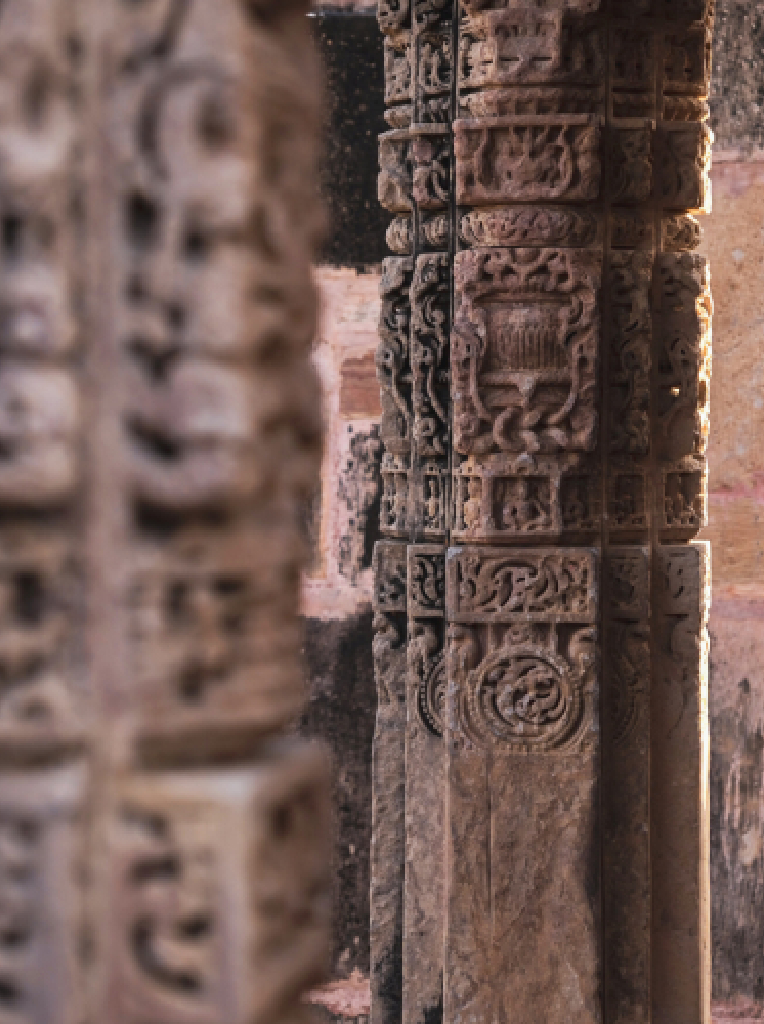
With such a sturdy heritage, the question is never whether one should visit Mehrangarh but whether one pauses to recognise the experience that exists beyond its walls. One visits, of course, for its sheer scale and grandeur; for the historic corners, to learn about the fort’s history and intricate architecture that were realised centuries before modern tools and processes. And yet, standing there, it becomes almost instinctive to look beyond the sandstone ramparts and into the indigo-washed city that breathes at its feet.
The roads may now be paved, the lime wash replaced with chemical paint, and cafés rise where old eateries once stood; yet the city’s blueprint remains unchanged. In Jodhpur, life and history exist in quiet inseparability. Nowhere is this more evident than in the old quarter that unfurls below Mehrangarh Fort. The famed indigo houses of the old city are more than a striking visual identity; they reflect a thoughtful blend of tradition and practicality. Historically, this distinctive blue marked the homes of a particular community. The lime-and-sulfate wash also served a functional purpose: keeping interiors cool beneath the desert sun while naturally repelling insects.
The age of the heritage palace hotels, magnificent but museum-like, is giving ground to a new model: experiences and spaces embedded in the city’s living fabric. RAAS Jodhpur, a restored haveli in the shadow of the fort, illustrates this approach. Close enough to the fort to feel its presence, yet invested in the surrounding neighbourhood. The rooms, the pool, and the rooftop at Baradari face Mehrangarh directly. Guests return from exploring the old city to a view, which functions less as spectacle and more as orientation, a reminder of where they actually are. This proximity matters. The Blue City is not a backdrop. It rewards the kind of slow, iterative exploration that the fort and its neighbourhood offer.
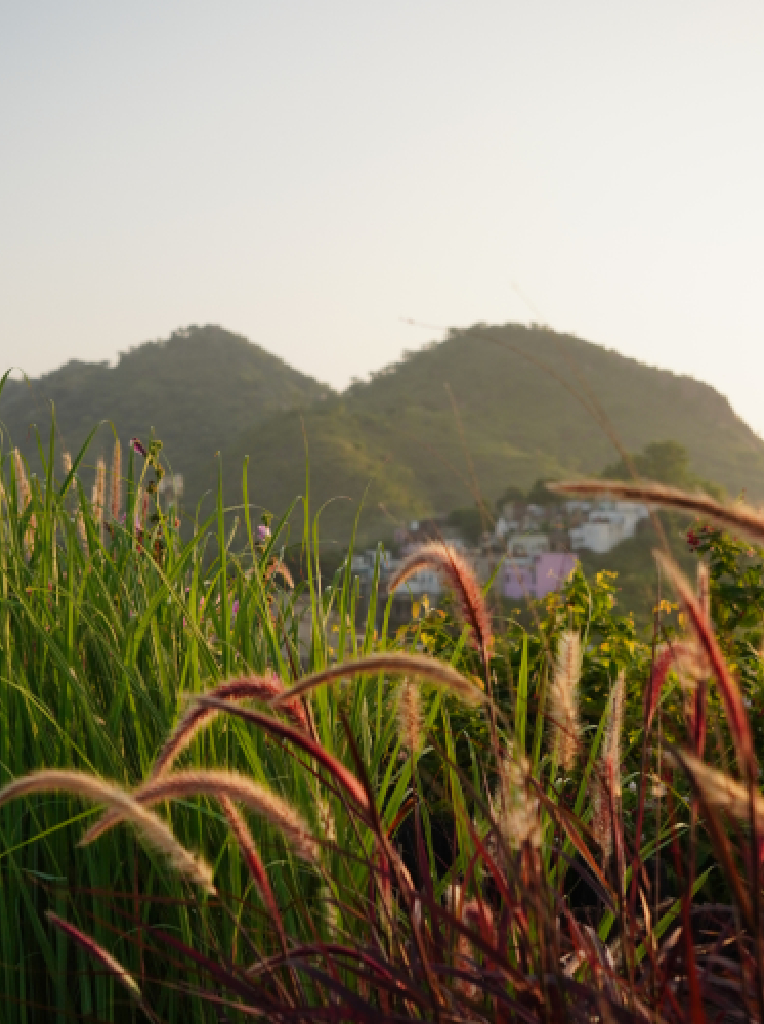
While most people see the fort from below, few walk the volcanic rock trails adjacent to it. The Rao Jodha Desert Park is a restoration of the “Thar” ecology. Built on an ancient volcanic formation (Rhyolite), walking the “Yellow Trail” at sunrise offers a view where the fort acts as a natural extension of the cliff. While tourists crowd rooftop cafés, locals climb Pachetia Hill. It is a steep walk through the blue houses, but at the top, you are at eye level with the fort’s lower ramparts. You can hear the evening Azaan (call to prayer) and temple bells merging in a soundscape you won’t find on Instagram.
The scale of history shifts beautifully from monumental to microscopic. As you move past the masonry and remarkable walls of the sandstone ramparts of Mehrangarh, you find delicate miniature paintings in the quiet bylanes. Look for small signs for “Art Schools” to meet miniature artists. These aren’t schools in the modern sense; they are small rooms where masters and students sit on the floor to create paintings so fine you need a magnifying glass to see the details. This intricacy is achieved using brushes made from a single squirrel’s hair and mineral pigments, stone ground into powder. Many artists, like those at Chauhans Art Gallery or Umaid Heritage Art School, offer the rare privilege of watching local masters create painstaking Rajasthani miniatures at leisure, unburdened by the obligation to buy.
The Mehrangarh Fort, the Clock Tower (Ghanta Ghar), and Jaswant Thada are on every traveller’s to-do list, but the Tripolia Bazaar and the old city’s morning ritual (street food) take a backseat. Make time to wander into the realm of the Manihari community at Tripolia Bazaar, where lacquer (lac) bangles have been crafted for centuries. Unlike plastic or glass, lac is a natural resin. In tiny, mirror-lined stalls, artisans sit cross-legged, heating the resin over small charcoal burners before shaping it delicately to the exact curve of your wrist. ‘Leheriya’ bangles, with their wavy bands of colour, make for particularly beautiful souvenirs.
Moving from map to the menu: the hole-in-the-walls, Mishtan bhandars, and the greasy spoons of Old City around Mehrangarh Fort have been making the case for Jodhpur’s culinary distinctiveness longer than the rooftop cafés promising undulating views. Shahi Samosa, Kachoris, and Mirchi Badas from Janta Sweet Home are some must-trys. Mishrilal’s Makhania Lassi at Sardar Market is flavoured with cardamom, saffron, and a dollop of white butter, and is so thick it needs to be eaten with a spoon.
A couple of kilometres from the fort is Jaswant Thada, the nineteenth-century marble cenotaph commemorating Maharaja Jaswant Singh II, which holds royal portrait galleries that most visitors walk past without entering. Mandore, the original Rathore capital before Jodhpur, contains a garden of cenotaphs and rock-cut temples that sees a fraction of Mehrangarh’s footfall.
With RAAS, one can experience Jodhpur not as a spectator, but as a participant in its daily chaos. The fort is the anchor, but the city – its lanes, its lakes, its villages, and its food are the real destination.