Jaipur and craft are synonymous. Step into the Pink City and history ambushes you at every corner. Then, before you’ve found your footing, the crafts move in. They are so deeply woven into the fabric of this city that missing them would require a deliberate effort. Jaipur’s reputation was earned in workshops. It was a block printer in a narrow Sanganer lane whose indigo-stained fingers told the story his grandfather left him. A gem setter in Johari Bazaar, embedding a stone that blinds the city. A weaver whose loom has not changed in three generations, because why fix what the world keeps asking for. These gem setters, weavers, block printers, and potters are the city’s engine. They are the reason Jaipur has for centuries held its place as one of the country’s most vital centres of art and craft.
One does not need a degree in history or politics to understand the city; they simply can follow the artisan into the workshop, the bazaar or the export house and see for themselves how it sustains itself, while being the quiet authority on everything India has offered to aesthetes.
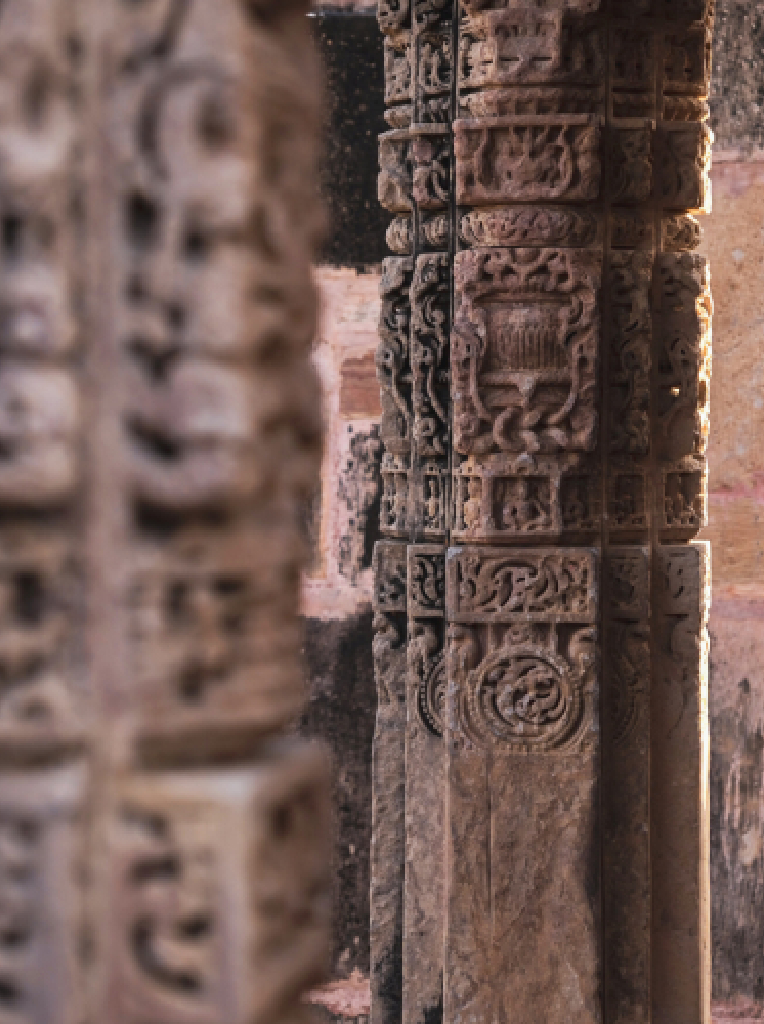
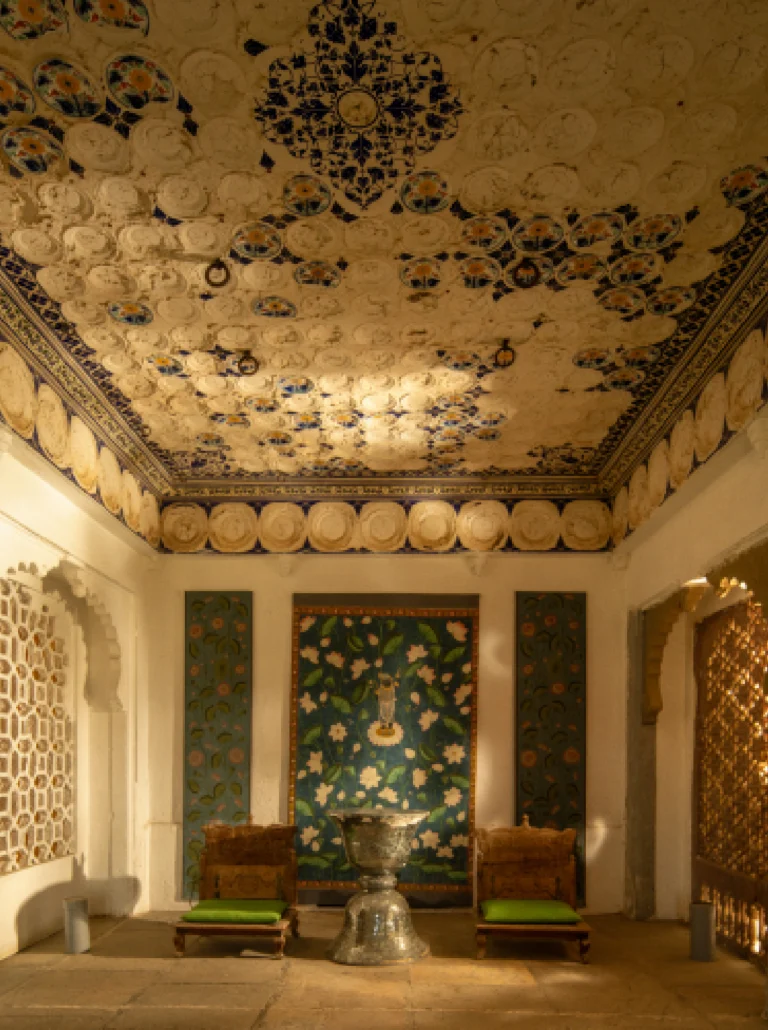
The Royal Family and the city have preserved their heritage with the care of a well-sealed jar of pickles: seasoned over time, immune to spoilage, and best savoured by those who understand what went into the making. Maharaja Sawai Jai Singh II’s initiative to make Jaipur a tax haven for artisans in 1734 drew craftspeople from across the country, which laid the groundwork for what would now be a flourishing cultural capital. Rajmahal Palace – the royal family’s residence, now a hotel managed by RAAS has preserved traditional artistic techniques of Jaipur. Generational craftsmanship resides in wallpapers, archways, upholstery and antique woodwork. A consistent effort at restoration and ethical sourcing ensures that the city’s engine is given the platform it deserves.
If you’ve taken up our suggestion to explore the city through its artisans, start in Sanganer. Rangrez (dyers), chhipas (printers), and dhobi (washers) work in a hypnotic rhythm, creating delicate motifs from blocks of wood imprinted on large rolls of fabric. These handblock printed fabrics then translate to light summer clothing, table linens, pillow covers and more. Next at Subhash Chowk, you can find metalsmiths hammering silver to make deities and idols that later reach thousands of temples in the country. Johari Bazaar’s cacophony should not fool you into thinking that this is just another market, because within these bylanes are jewellers setting some of the rarest gems in exquisite designs. End at a rug workshop. Watch a weaver on an ancient loom, pulling threads and building tension, yet somehow making something so soft that the floor becomes the most elegant thing in the room.
The artisan epitomizes Jaipur. What was once confined to narrow lanes and family workshops is now finding its way to the right rooms, the right runways, the right conversations. The world has taken notice. Artisans from modest workshops in Mansarovar produce pieces of such exquisite craftsmanship that they earn a place at Milan Design Week. International fashion houses lay hand-knotted Jaipur rugs as runways to showcase their collections. Block prints find their way onto runways. Inlay work adorns the walls of homes that make the cover of magazine spreads.
Cities are remembered for what they chose to protect. Rome protected its ruins, Paris its love and Kyoto its rituals. Jaipur’s answer has always been its craft, as a living, breathing, earning tradition. And when you support the craft, you are taking home a signature – a story that was three centuries in the making.